REST API Monitor
REST API monitor regularly checks the response of your REST APIs and alerts you if the response does not contain the specified attribute value at the given XPath/Attribute name.
Add REST API Monitor
- Click Admin > Inventory > Monitors > Add Monitor.
- Select REST API Monitor in Add Monitor page.
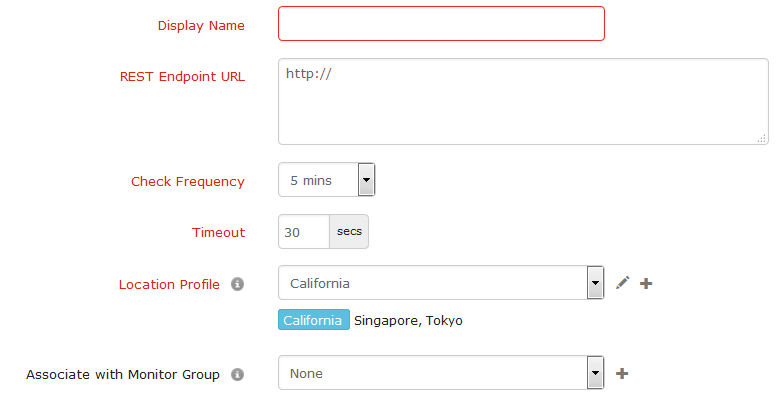
- Specify the following details to add the website monitor:
- Display Name: Provide an appropriate name for the website which you want to monitor.
- REST Endpoint URL: Type the REST Endpoint URL which needs to be monitored.
- Timeout: Specify time in seconds the connection need to establish with the target server.
- Check Frequency: Change poll interval to check frequency.
- Location Profile: Select a location profile from the dropdown list from where the website will be monitored.
To know more, refer Location Profile.
- Associate with Monitor Group: Select a monitor group from the drop down list to logically group your monitors.
To learn how to create a group for your monitors, refer Monitor Groups.
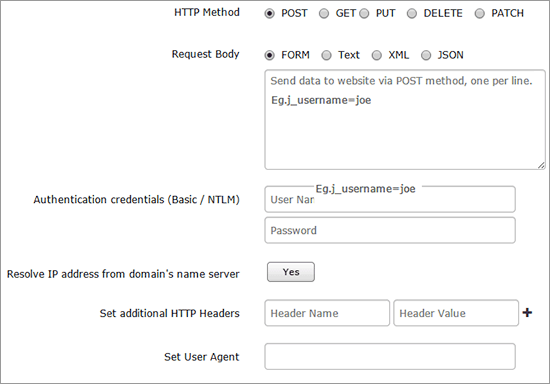
- Specify the following details for HTTP Configuration:
- HTTP Method: Select the appropriate radio button to configure your form submission method. Site24x7 supports POST, GET, PUT, DELETE and PATCH. Also select the appropriate body type for POST, PUT, PATCH HTTP Method.
- Authentication Credentials: Provide User Name and Password to monitor websites that require Basic/NTML authentication.
- Resolve IP address from Domain's Name Server: Use the toggle button to decide whether to resolve the name server. When enabled, Site24x7 will resolve the IP address from the name server of your domain.
- Set additional HTTP Headers HTTP and User agent: Set customized user agent sent on request and the HTTP headers. Provide user agent and appropriate header name and header value.
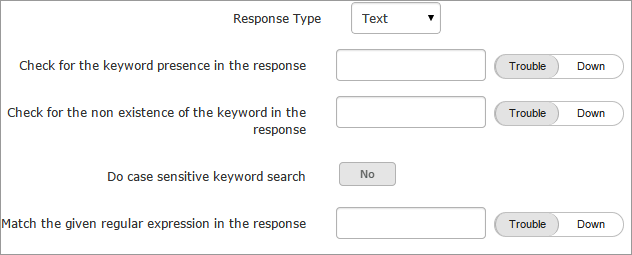
- Specify the following details for Content Match:
- If the selected Response Type is Text
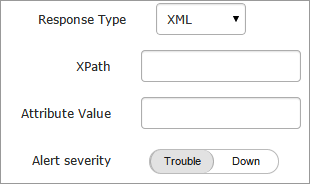
- If the selected Response Type is XML
- Xpath and Attribute Value: Provide the XPath and expected Attribute Value for your XML Output.
- Alert Severity: Use the slider button to trigger the required kind of alert.
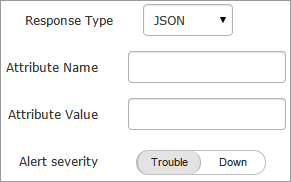
- If the selected Response Type is JSON
- Attribute Name and Value: Configure the expected Attribute Name and Attribute Value to validate the expected JSON output.
- Alert Severity: Use the slider button to trigger the required kind of alert.
- Specify the following details for Configuration Profiles:
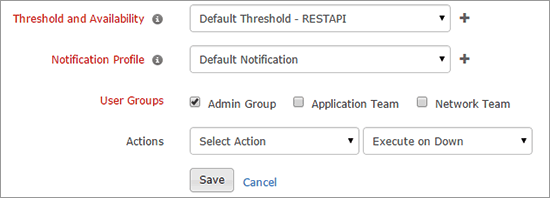
- Threshold and Availability: Select a threshold profile from the drop down list or choose the default threshold set available and get notified when the resources cross the configured threshold and availability.
To create a customized threshold and availability profile, refer Threshold and Availability.
- Notification Profile: Choose a notification profile from the drop down or select the default profile available. Notification profile helps to configure when and who needs to be notifed in case of downtime.
Refer Notification Profile to create a customized notification profile.
- User Groups: Select the user group that need to be alerted during a outage.
To add multiple users in a group, see User Groups.
- Action: Select an action to be executed when the website is down/trouble/up/any status change/any attribute change. The defined action gets executed when there is a state change and selected user groups are alerted.
To automate corrective actions on failure, refer Actions.
- Click Save.