Port Monitoring
Track the availability of your TCP/IP ports at the set frequency from different locations. Stay alerted in case of downtime and when there is a content mismatch in the response.
Add a Port Monitor
- Click Admin > Inventory > Monitors > Add Monitor.
- Select Port Monitor in Add Monitors page.
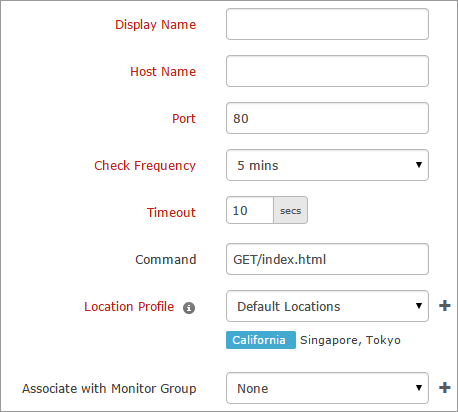
- Specify the following details to add the port monitor:
- Display Name: Provide a appropriate name for the port monitor.
- Host Name: Specify a name for TCP/IP host.
- Port: Enter your port.
- Timeout: Specify time in seconds the connection need to establish with the target server.
- Command: Configure a command that can be executed through the port.
- Check frequency: Change poll interval to check frequency. The frequency can be set from 1 minute to 1 day.
- Location Profile: Select a location profile from the drop down list from where the TCP/IP Ports can be polled from the selected location.
To know more, refer Location Profile.
- Associate with Monitor Group: Select a monitor group from the drop down list to logically group your monitors.
To learn how to create a group for your monitors, refer Monitor Groups.
- Specify the following details for Content Match:
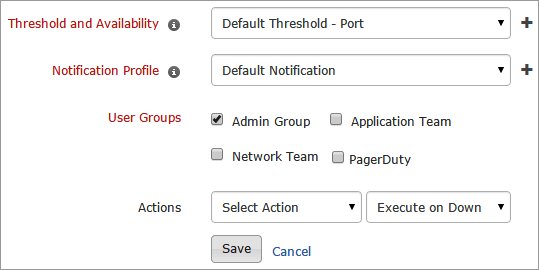
- Specify the following details for Configuration Profiles:
- Threshold and Availability: Select a threshold profile from the drop down list or choose the default threshold set available and get notified when the resources cross the configured threshold and availability.
To create a customized profile, refer Threshold and Availability.
- Notification Profile: Choose a notification profile from the drop down or select the default profile available. Notification profile helps to configure when and who needs to be alerted in case of downtime.
Refer Notification Profile to create a customized notification profile.
- User Groups: Select the user group that need to be alerted during a outage.
To add multiple users in a group, see User Groups.
- Actions: Select an action to be executed when the port is down/trouble/up/any status change/any attribute change. The defined action gets executed when there is a state change and selected user groups are alerted.
To automate corrective actions on failure, refer Actions.
- Click Submit.