by Jenifer P
Greetings!
The kubelet oversees containers on each Kubernetes node. If it encounters errors, Pod Lifecycle Event Generator (PLEG) staleness, or storage issues, pods may fail, and nodes may become unreliable. Without detailed metrics, troubleshooting is slow and difficult.
With kubelet monitoring enabled, you can track container runtime errors in real time, identify pod startup regressions, detect PLEG staleness before it affects node responsiveness, and correlate storage failures with pod scheduling issues—all from a single dashboard.
Key benefits of Kubernetes kubelet monitoring
Kubernetes kubelet monitoring in Site24x7 gives you the following:
- Detect runtime issues early: Actively monitor kubelet runtime operations and errors to quickly find and resolve container runtime issues.
- Reduce pod startup delays: Track pod startup duration and worker operations to reveal scheduling anomalies and startup bottlenecks.
- Prevent container tracking issues: Measure PLEG activity and relist delays to uncover and prevent node responsiveness disruptions early.
- Avoid storage-related failures: Monitor volume mount and unmount operations to pinpoint storage issues before they stall workloads.
- Improve kubelet stability: Track CPU, memory, goroutines, and file descriptors to detect and address resource issues early.
- Ensure consistent resource isolation: Analyze cgroup operation times to detect delays in pod resource isolation enforcement.
Getting started
To set up Kubernetes kubelet monitoring, review prerequisites, supported metrics, and alert configuration in our help documentation.
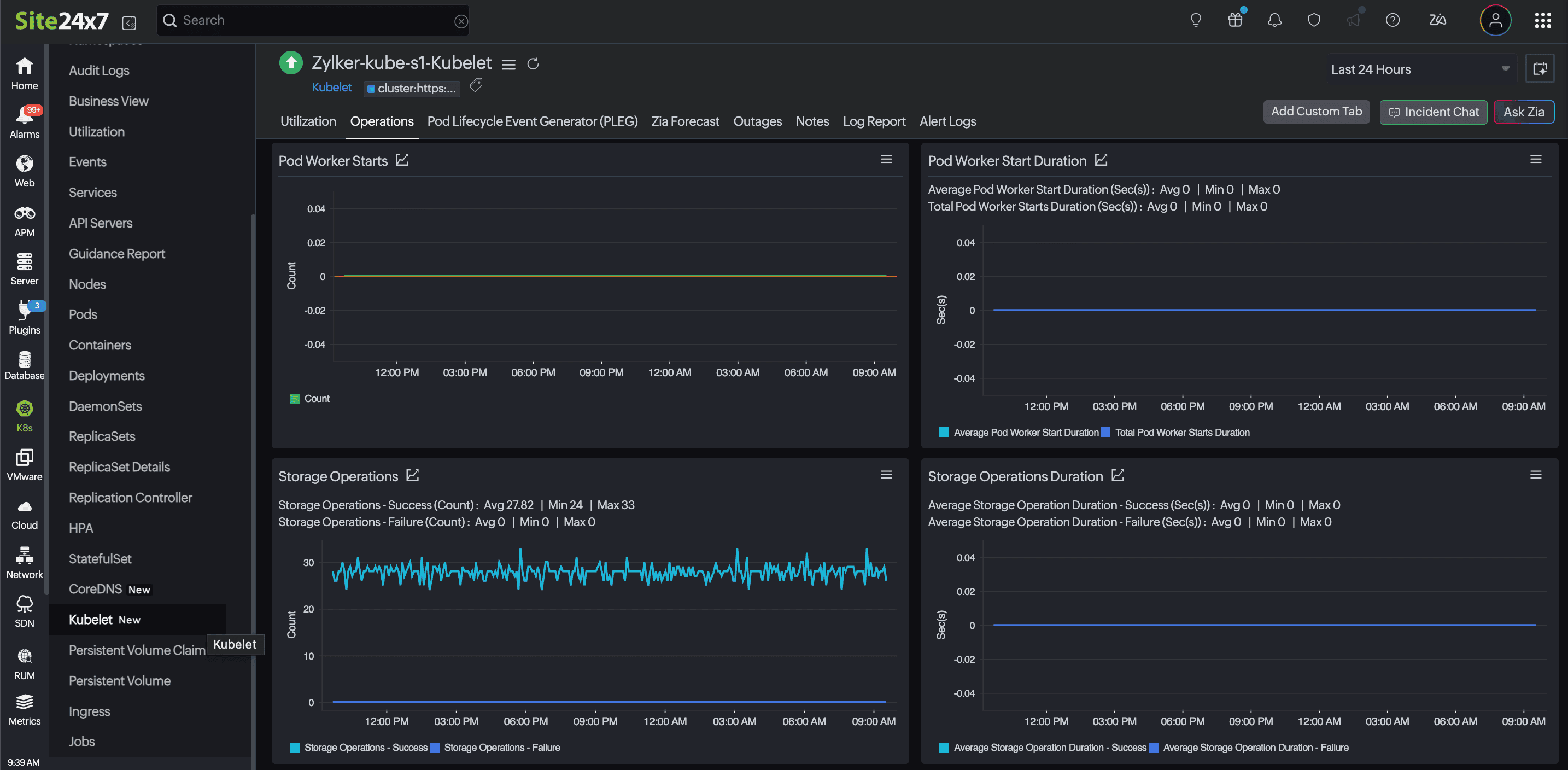
Do you have any thoughts or questions? Share them in the comments below, start monitoring your Kubernetes kubelet with Site24x7 today!
Warm regards,
The Site24x7 team
Like (0)
Reply
Replies (0)